
How I Learned to Stay and Shine — with Spirit
Wanting to stay in the work for social justice and collective liberation — without burning out or abandoning myself — led me onto a deeper path of healing and spirituality over twenty years.
As I opened into a greater sense of wholeness, belonging, and guidance from Spirit, I discovered that staying in the work was only the beginning.
Getting freer from internalized oppression and following my calling allowed my life and work to open to more ease, joy, and aliveness —
Letting my light shine as a gift and medicine for both myself and my people in these burning times.

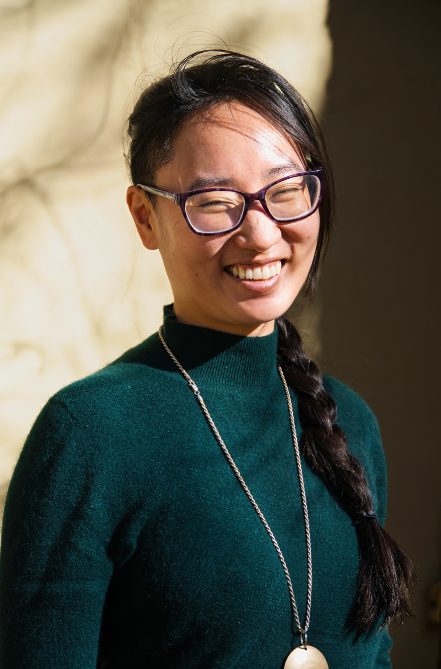
About Sandra Kim 김수정
Grounded Mysticism for Collective Liberation
I’m a spiritual midwife and shamanic healer for liberatory transformation, rooted in multiple lineages including Zen Buddhism, Korean shamanism and other shamanic traditions, and energy work over two decades. (See professional bio here.)
I work with people committed to social justice and collective liberation whose bodies are saying no — to the constant urgency, the ongoing toll, the self-abandonment — even if they’re not yet clear on the yes they’re being called toward or how to follow it.
I support people in transforming breakdowns into awakenings — by healing from internalized oppression and reconnecting with Spirit and purpose.
So their lives and work can open to more ease, joy, and aliveness and their light can serve as a gift and medicine for both themselves and their communities during these burning times.
If you’re here, you may already hear your body longing for something to change - even as it fears it.
I understand this moment well.
How I Came to This Work
For the first half of my life, I believed I needed to take the hits so my people wouldn’t have to.
From a young age, I felt that if I cried out, no one would come.
So I made an unconscious vow — if someone cried out, I would go to them and make sure they knew they weren’t alone, it wasn’t their fault, and it could get better.
That orientation shaped my entire life.
I became the strong, responsible, and reliable one — the person who could handle difficult situations and support people in crisis when others couldn’t.
I became the rock. I became a rock.
Over time, I realized that being a rock meant I had stopped being seen as a human with needs, feelings, and limits - by myself and by others.
By my early twenties, this vow had hardened into a pattern of deep self-sacrifice — both in my nonprofit work with survivors of trauma and violence and in my personal relationships with loved ones in ongoing crisis.
There came a point when I felt I had only two choices — silence my own needs to keep others alive and safe or step away to take care of myself and let them get hurt or even die.
Not wanting to let them be harmed, I chose to silence myself.
I believed I was strong enough to carry it all. I didn’t know who else would step up if I didn’t.
So I kept showing up for others — no matter the cost to me.
The Breakdown That
Became a Turning Point
However the moment I realized I had a choice, my pattern of self-sacrifice began to crack.
Until then, self-sacrificing had been normalized to me — a survival strategy inherited from generations who believed that enduring suffering was the pathway to keeping our people alive.
But deep awareness is a kind of fire. Once lit, it spreads.
The dissonance between what I was doing and what I truly needed became unbearable. With the support of people who loved me, I began to say no.
The first time I didn’t rush in to manage a major crisis, the person I had been trying to protect spiraled and caused real harm — to himself and to others.
Without me intervening, he was forced to confront himself. He realized he didn’t want to become the violent person he had been told he was.
That moment changed me.
I saw how constantly “protecting” him had robbed both of us — me of my humanity and him of his growth and responsibility.
If you've ever felt responsible for keeping others afloat while drowning yourself, you know this pattern. It's not personal weakness — it's learned survival.
I also began to see this pattern everywhere — at work, in my family, and in other relationships. I was the common denominator.
I wanted to understand how I had arrived here — and how to heal so I would never return. I took a year away from my normal life, including work, with the support of loved ones and community resources.
I committed fully to healing — therapy, support groups, Buddhist mindfulness practice, inner child work, somatic regulation, and more that helped me learn how to tend to my pain, fear, and anger.
As I untangled my story, I saw that it wasn’t just personal to me. It lived in my body because of the systems around me.
While systems of oppression often leave people feeling not enough or unworthy, my response was a bit different.
Growing up in a society that did not care for our feelings and needs taught me that I was/had to be enough and I could be/had to be the strong one — the one who carried what others dropped, who took action, because no one else could or would.
What I once believed was simply “doing what needed to be done” no matter the cost was, in fact, a survival role shaped by growing up so unseen and unsupported.
What Healing Made Possible
Deciding to stop being the rock did not mean I could simply stop.
I had the will, but not yet the practice. My body carried decades of muscle memory — jumping in, protecting, silencing myself, carrying what wasn’t mine.
I began by facing a painful truth: in becoming a rock for others, I had also taught them to rely on me. I had learned to appear “fine” by suppressing everything that wasn’t.
So my healing work had to be slow and relational.
I began reparenting the parts of me that had learned they didn’t matter — the silenced, furious, heartbroken ones. I learned how to tend to their pain instead of abandoning it.
I also realized I had given up something fundamental — the belief that I had the right to be happy. It was a sacrifice I had unconsciously made in order to keep others alive.
So I began a simple practice. Each morning, I reminded myself — not that I was happy, or even that I would be — but that I had the right to the possibility of it.
Over time, something shifted.
As my self-sacrificing patterns loosened and I reclaimed my own humanity, my nervous system reorganized. It was no longer structured solely around vigilance and responsibility.
There was space — not just for rest, but for listening.
I wasn’t trying to become more spiritual. I was learning how to be compassionately present in my body without bracing against the violence of the world.
And in that quieting, I began to notice what had always been there.
Healing didn’t take me away from reality. It made me more available to it.
Healing That Opened Into Spirit
As my healing journey deepened and my Zen Buddhist practice matured over more than a decade, the noise of trauma and internalized oppression in my body gradually quieted.
As that quieting deepened something unexpected happened.
I began perceiving more of the invisible realm and entering into communication with spirits, including my ancestors and the land.
Whether you call this intuition, inner knowing, Spirit, or something else entirely, you may recognize this — the sense that there's more available to us than what we've been taught to see.
When I spoke with Buddhist monastics about this, they understood immediately. They told me the development of sensitivities and intuition about the invisible realm is a known byproduct of a deep Buddhist practice — though it is rarely discussed with lay practitioners.
As a teenager, I had experienced an early opening of spiritual sight. But without teachers or guidance, it frightened me, and I shut it down. The physical world already felt like enough to manage.
This time was different.
I felt a responsibility to develop spiritually as fully as I could — so that whatever skills and experience I cultivated could be passed on to future generations facing increasingly complex crises.
So I sought teachers. I learned how to engage with and support the invisible realm slowly, safely, and with discernment.
Along the way, I continued to be called by Spirit to release what was no longer aligned — to let parts of my life fall away and step into the unknown.
Each time I resisted, my life became increasingly painful and constricted, making it clear what could no longer be sustained.
Each time I said yes, something reorganized.
Space opened. Support appeared. And a truer way of living began to take shape — not all at once, but step by step.
Over time, my body learned this rhythm as a cycle of spiritual initiation —
a call, a letting go, a crossing, and a return with greater alignment.
Saying yes became less dramatic and more natural.
And my life grew steadily more free, more rooted, and more responsive to what I was being asked to become.
Answering My Spiritual Calling
As my relationships with Spirit, ancestral helping spirits, and nature spirits deepened, I began to feel — more and more clearly — that I was not alone.
That I had always been accompanied, guided, and held in caring relationship, even if I hadn’t been aware of it before.
This awareness opened me to new possibilities and invited me to follow Spirit more deeply into the Mystery.
Several years ago, during a month-long solitary spiritual retreat in a forest, I was asked to support the land by helping earthbound spirits complete their transition after death.
Drawing on prior training, I was able to offer this support to those who were ready. When I left, the land felt lighter and more at ease.
Through this work, I began to wonder whether my spiritual gift was, in fact, a spiritual calling — and what it would mean to step into that role.
I believed all people have an inherent ability to connect with Spirit, ancestors, and the land, because being connected to All-That-Is is a part of what it means to be human.
But modern culture has often denied, suppressed, or demonized this capacity through colonization and systems of domination.
I also understood that some people are called to serve as intermediaries between the human and spirit realms, helping to cultivate greater balance and right relationship between them — often called shamans in English.
When I consulted with different Korean shaman-priestesses (mudang 무당), they confirmed that my ancestors were organizing for me to be initiated as a mudang.
I wrestled deeply with whether or not to accept my calling — with how my family would worry about the stigma attached to being a mudang after centuries of persecution in Korea; with how moving further toward the margins of society might leave me less understood and more isolated; with the complex responsibility of carrying an indigenous Korean shamanic tradition while living on colonized, non-Korean land and working primarily with non-Korean people.
But beneath all of that, one truth was clear.
I was here for liberation — not just my own or even for all of humankind.
I was here for liberation of all beings — human and non-human, seen and unseen.
So I said yes.
That yes changed everything — again.
The Work I Do Now
I have long believed that social liberation and spiritual liberation are interdependent and need each other for either one to fully exist.
Before my work took on an explicitly spiritual form, I spent two decades supporting people in healing from internalized oppression and reclaiming their humanity in a dehumanizing world.
What has changed for me now is that I see how much more supported and possible this work for liberation becomes when we cultivate a direct relationship with Spirit.
This relationship can help guide, sustain, and call us forward into who we are meant to be — for our people, during these burning times.
I also recognized something else.
I am still going to people who are crying out. But I no longer do it by sacrificing myself or carrying what is not mine.
Today, Spirit works with me and through me to support people committed to justice and collective liberation in:
Returning to their bodies
Reconnecting with their souls
Coming back into relationship with Spirit
Discerning and following their calling
When people come to me in moments of breakdown, exhaustion, confusion, or longing, I help them remember what I once longed to hear myself —that they are not alone, it’s not their fault, and it can get better.
Not through my effort alone, but by supporting them in reconnecting with their own inner guidance - whether from their own soul, Spirit, ancestral helping spirits, or spirit allies.
Now I guide people in transforming life's breakdowns into sacred awakenings — helping them get free from internalized oppression and old survival strategies, so they can live a Spirit-led life — embodying their soul's purpose and offering their light as a gift and medicine for their people in these burning times.
They feel a greater sense of clarity, groundedness, relief, and hope. Not because everything is suddenly fixed, but because they remember they belong to the sacred web of life, are guided by Spirit, and follow their calling — even as the world burns.
If This Resonates
If something in you feels seen reading this — and another part feels unsure what comes next — that’s not a problem to solve.
It often means your body understands more than your mind has words for yet.
You may not be struggling, because you’re failing.
You may be standing at the edge of an initiation - where you’re being asked to let something die, so a more liberating truth can be born.
It’s not one you have to force or figure out alone.
But it is one that asks you to slow down, be resourced, and listen to your inner guidance.
If You’re Feeling the Pull
You may be in a place where what used to work no longer does.
You can feel your body saying no — to the constant urgency, the unending toll, the self-abandonment, and more.
But you’re not yet clear on how to show up differently.
This is where my work begins.
I offer spiritual support for people committed to justice and collective liberation who are facing breakdowns, transitions, or awakenings — and want to listen for their inner guidance.
If you’d like to explore what support could look like for you, you can begin here:
👉🏽 Check out Individual Spiritual Support
And if you’re not ready yet, that’s ok. I’ll be here when you are.
With love and in solidarity,